

Spring 2015s edition of ONE Life magazine shines a light on world trends, culture and design as the award-winning, proprietary lifestyle publication of ONE Sothebys International Realty. Were blogging the unique content available in this exclusive publication. The second installation explore what every oenophile knows; that not every fine wine is worth a spot in their cellar. Well take a look at some of the blue-chip bottles that are always in demand.
Cream always rises to the top, noted wine critic Robert M. Parker Jr. once observed. He was referring to Bordeauxs Chateau Latour, but the adage could be applied to most of the worlds blue-chip wines. Blue-chip wines such as the Bordeaux First Growths (Latour, Lafite, Mouton, Margaux and Haut-Brion), Chateau Petrus, a handful of white and red Burgundies led by the Domaine de la Romanee-Conti, a few Italian reds and a cluster of cult Cabernets from California.
Over the past few decades, prices for these wines have outperformed almost every stock market on the planet. Consider Chateau Mouton-Rothschild from the legendary 1982 vintage. When the wine was first released, it sold in the neighborhood of $400 per case. By March 1994, according to Decanter magazines Fine Wine Tracker, it had risen to $1,375; in November 2005, it was $6,670. The same case is now worth around $12,000.
The explanation for these skyrocketing prices can be found in the timeless law of supply and demand. Production at the First Growth estates rarely exceeds 20,000 cases annually; each time a locus of new wealth develops around the world, those fledgling millionaires and billionaires seek the same wines as badges of honor. In the case of Chateau Petrus, where output seldom exceeds 4,000 cases, competition and prices are higher still. By the time you get to Romanee-Conti, the flagship wine from the Burgundy estate of the same name, only 450 cases are available in an average vintage.
Little wonder, then, that a superlot of Romanee-Conti recently sold for more than $1.6 million at an auction conducted by Sothebys wine division. The lot consisted of six bottles from each vintage from 1992 through 2010, 114 in total. The result wasnt surprising, considering that a single case of the 1990 had sold for slightly more than $120,000 at auction three years earlier.
Both of the Sothebys auctions took place in Hong Kong, the current epicenter of demand for fine wine. Asian collectors have been bidding up the price of Bordeaux and Burgundy for nearly a decade, with Chateau Lafite-Rothschild emerging as the re- gions ultimate prize. Prices have now cooled, but at their peak a case of Lafite from a noteworthy vintage sold for two or three times as much in Hong Kong as in London or New York.
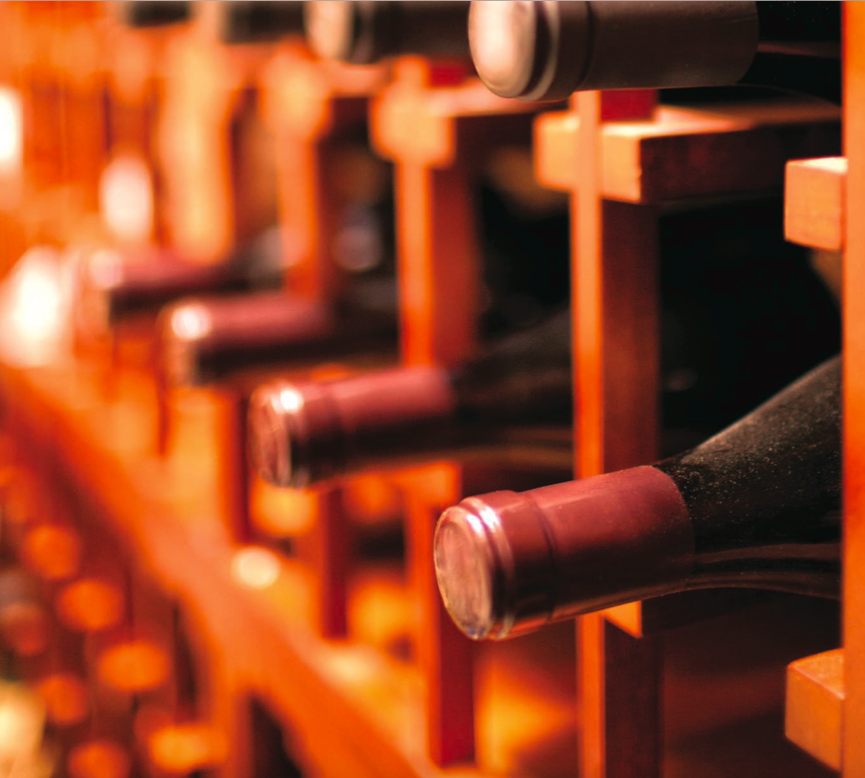
On the surface, then, it would seem that blue-chip wine is the ultimate collectible - but, like any other investment, it has its pitfalls. Someone buying fine wine as an investment needs to have pristine storage conditions (constant levels of temperature and humidity, with backup generators to guarantee the environment). They must be prepared to hold the wine for years and sometimes decades. They must display sound judgment in choosing vintages; a case of 2000 Chateau Petrus, for example, is currently worth nearly $36,000, while a case of the 2004 would sell for one-third as much.
Above all, they have to realize that constantly accelerating prices are not guaranteed: Ultimately, wine is worth what someone is willing to pay for it. Choose wisely the next time you bid on a bottle at auction. But even if your wine doesnt appreciate significantly in price, the good news is: You still have the consolation of drinking it.
Hottest Wines At Auction
Not all wine ages well, and only a small fraction tends to have collectible value. Here, a quick guide to some wines that have consistently appreciated over time.Click here to see the full issue.
- Bordeaux: The First Growths (Lafite, Mouton, Latour, Margaux and Haut- Brion); Petrus, Ausone, Cheval Blanc and Le Pin; Chateau dYquem; most wines from the 1855 Classification
- Burgundy: Domaine de la Romanee- Conti; top small growers such as Coche-Dury, Comte Lafon and Domaine Leroy
- Rhone Valley: Hermitage la Chapelle from Paul Jaboulet; the single- vineyard Cote-Rotie from Guigal (La Mouline, La Turque and La Landonne)
- Italy: Sassicaia; Ornellaia; Solaia by Antinori; Biondi-Santi Brunello; the single-vineyard Barbarescos from Gaia (Sori Tilden, Costa Russi and Sori San Lorenzo)
- California: The cult Cabernets (Screaming Eagle, Harlan Estate, Bryant Family, Grace Family); select wines from Araujo, Colgin, Dalla Valle, Diamond Creek, Opus One
- Champagne: Vintage-dated Krug, Salon, Dom Perignon and Salon
- Port: The best vintages (1963, 1970, 1977, 1994 and 2000) from the top producers (Dow, Graham, Fonseca, Taylor Fladgate)


Spring 2015s edition of ONE Life magazine shines a light on world trends, culture and design as the award-winning, proprietary lifestyle publication of ONE Sothebys International Realty. Were blogging the unique content available in this exclusive publication. The second installation explore what every oenophile knows; that not every fine wine is worth a spot in their cellar. Well take a look at some of the blue-chip bottles that are always in demand.
Cream always rises to the top, noted wine critic Robert M. Parker Jr. once observed. He was referring to Bordeauxs Chateau Latour, but the adage could be applied to most of the worlds blue-chip wines: the Bordeaux First Growths (Latour, Lafite, Mouton, Margaux and Haut-Brion), Chateau Petrus, a handful of white and red Burgundies led by the Domaine de la Romanee-Conti, a few Italian reds and a cluster of cult Cabernets from California.
Over the past few decades, prices for these wines have outperformed almost every stock market on the planet. Consider Chateau Mouton-Rothschild from the legendary 1982 vintage. When the wine was first released, it sold in the neighborhood of $400 per case. By March 1994, according to Decanter magazines Fine Wine Tracker, it had risen to $1,375; in November 2005, it was $6,670. The same case is now worth around $12,000.
The explanation for these skyrocketing prices can be found in the timeless law of supply and demand. Production at the First Growth estates rarely exceeds 20,000 cases annually; each time a locus of new wealth develops around the world, those fledgling millionaires and billionaires seek the same wines as badges of honor. In the case of Chateau Petrus, where output seldom exceeds 4,000 cases, competition and prices are higher still. By the time you get to Romanee-Conti, the flagship wine from the Burgundy estate of the same name, only 450 cases are available in an average vintage.

Little wonder, then, that a superlot of Romanee-Conti recently sold for more than $1.6 million at an auction conducted by Sothebys wine division. The lot consisted of six bottles from each vintage from 1992 through 2010, 114 in total. The result wasnt surprising, considering that a single case of the 1990 had sold for slightly more than $120,000 at auction three years earlier.
Both of the Sothebys auctions took place in Hong Kong, the current epicenter of demand for fine wine. Asian collectors have been bidding up the price of Bordeaux and Burgundy for nearly a decade, with Chateau Lafite-Rothschild emerging as the re- gions ultimate prize. Prices have now cooled, but at their peak a case of Lafite from a noteworthy vintage sold for two or three times as much in Hong Kong as in London or New York.
On the surface, then, it would seem that blue-chip wine is the ultimate collectiblebut, like any other investment, it has its pitfalls. Someone buying fine wine as an investment needs to have pristine storage conditions (constant levels of temperature and humidity, with backup generators to guarantee the environment). They must be prepared to hold the wine for years and sometimes decades. They must display sound judgment in choosing vintages; a case of 2000 Chateau Petrus, for example, is cur- rently worth nearly $36,000, while a case of the 2004 would sell for one-third as much. Above all, they have to realize that constantly accelerating prices are not guaranteed: Ultimately, wine is worth what someone is willing to pay for it.
Choose wisely the next time you bid on a bottle at auction. But even if your wine doesnt appreciate significantly in price, the good news is: You still have the consolation of drinking it.
Hottest Wines At Auction:
Not all wine ages well, and only a small fraction tends to have collectible value. Here, a quick guide to some wines that have consistently appreciated over time.
Bordeaux: The First Growths (Lafite, Mouton, Latour, Margaux and Haut- Brion); Petrus, Ausone, Cheval Blanc and Le Pin; Chateau dYquem; most wines from the 1855 Classification
Burgundy: Domaine de la Romanee- Conti; top small growers such as Coche-Dury, Comte Lafon and Domaine Leroy
Rhone Valley: Hermitage la Chapelle from Paul Jaboulet; the single- vineyard Cote-Rotie from Guigal (La Mouline, La Turque and La Landonne)
Italy: Sassicaia; Ornellaia; Solaia by Antinori; Biondi-Santi Brunello; the single-vineyard Barbarescos from Gaia (Sori Tilden, Costa Russi and Sori San Lorenzo)
California: The cult Cabernets (Screaming Eagle, Harlan Estate, Bryant Family, Grace Family); select wines from Araujo, Colgin, Dalla Valle, Diamond Creek, Opus One
Champagne: Vintage-dated Krug, Salon, Dom Perignon and Salon
Port: The best vintages (1963, 1970, 1977, 1994 and 2000) from the top producers (Dow, Graham, Fonseca, Taylor Fladgate)
Click here to see the full issue.
To subscribe to ONE LIFE Magazine click here.
Spring 2015s edition of ONE Life magazine shines a light on world trends, culture and design as the award-winning, proprietary lifestyle publication of ONE Sothebys International Realty. Were blogging the unique content available in this exclusive publication. The second installation explore what every oenophile knows; that not every fine wine is worth a spot in their cellar. Well take a look at some of the blue-chip bottles that are always in demand.
Cream always rises to the top, noted wine critic Robert M. Parker Jr. once observed. He was referring to Bordeauxs Chateau Latour, but the adage could be applied to most of the worlds blue-chip wines: the Bordeaux First Growths (Latour, Lafite, Mouton, Margaux and Haut-Brion), Chateau Petrus, a handful of white and red Burgundies led by the Domaine de la Romanee-Conti, a few Italian reds and a cluster of cult Cabernets from California.
Over the past few decades, prices for these wines have outperformed almost every stock market on the planet. Consider Chateau Mouton-Rothschild from the legendary 1982 vintage. When the wine was first released, it sold in the neighborhood of $400 per case. By March 1994, according to Decanter magazines Fine Wine Tracker, it had risen to $1,375; in November 2005, it was $6,670. The same case is now worth around $12,000.
The explanation for these skyrocketing prices can be found in the timeless law of supply and demand. Production at the First Growth estates rarely exceeds 20,000 cases annually; each time a locus of new wealth develops around the world, those fledgling millionaires and billionaires seek the same wines as badges of honor. In the case of Chateau Petrus, where output seldom exceeds 4,000 cases, competition and prices are higher still. By the time you get to Romanee-Conti, the flagship wine from the Burgundy estate of the same name, only 450 cases are available in an average vintage.
Little wonder, then, that a superlot of Romanee-Conti recently sold for more than $1.6 million at an auction conducted by Sothebys wine division. The lot consisted of six bottles from each vintage from 1992 through 2010, 114 in total. The result wasnt surprising, considering that a single case of the 1990 had sold for slightly more than $120,000 at auction three years earlier.
Both of the Sothebys auctions took place in Hong Kong, the current epicenter of demand for fine wine. Asian collectors have been bidding up the price of Bordeaux and Burgundy for nearly a decade, with Chateau Lafite-Rothschild emerging as the re- gions ultimate prize. Prices have now cooled, but at their peak a case of Lafite from a noteworthy vintage sold for two or three times as much in Hong Kong as in London or New York.
On the surface, then, it would seem that blue-chip wine is the ultimate collectiblebut, like any other investment, it has its pitfalls. Someone buying fine wine as an investment needs to have pristine storage conditions (constant levels of temperature and humidity, with backup generators to guarantee the environment). They must be prepared to hold the wine for years and sometimes decades. They must display sound judgment in choosing vintages; a case of 2000 Chateau Petrus, for example, iscur- rently worth nearly $36,000, while a case of the 2004 would sell for one-third as much. Above all, they have to realize that constantly accelerating prices are not guaranteed: Ultimately, wine is worth what someone is willing to pay for it.
Choose wisely the next time you bid on a bottle at auction. But even if your wine doesnt appreciate significantly in price, the good news is: You still have the consolation of drinking it.
Hottest Wines At Auction:
Not all wine ages well, and only a small fraction tends to have collectible value. Here, a quick guide to some wines that have consistently appreciated over time.
Bordeaux: The First Growths (Lafite, Mouton, Latour, Margaux and Haut- Brion); Petrus, Ausone, Cheval Blanc and Le Pin; Chateau dYquem; most wines from the 1855 Classification
Burgundy: Domaine de la Romanee- Conti; top small growers such as Coche-Dury, Comte Lafon and Domaine Leroy
Rhone Valley: Hermitage la Chapelle from Paul Jaboulet; the single- vineyard Cote-Rotie from Guigal (La Mouline, La Turque and La Landonne)
Italy: Sassicaia; Ornellaia; Solaia by Antinori; Biondi-Santi Brunello; the single-vineyard Barbarescos from Gaia (Sori Tilden, Costa Russi and Sori San Lorenzo)
California: The cult Cabernets (Screaming Eagle, Harlan Estate, Bryant Family, Grace Family); select wines from Araujo, Colgin, Dalla Valle, Diamond Creek, Opus One
Champagne: Vintage-dated Krug, Salon, Dom Perignon and Salon
Port: The best vintages (1963, 1970, 1977, 1994 and 2000) from the top producers (Dow, Graham, Fonseca, Taylor Fladgate)
Click here to see the full issue.
To subscribe to ONE LIFE Magazine click here.
Spring 2015s edition of ONE Life magazine shines a light on world trends, culture and design as the award-winning, proprietary lifestyle publication of ONE Sothebys International Realty. Were blogging the unique content available in this exclusive publication. The second installation explore what every oenophile knows; that not every fine wine is worth a spot in their cellar. Well take a look at some of the blue-chip bottles that are always in demand.
Cream always rises to the top, noted wine critic Robert M. Parker Jr. once observed. He was referring to Bordeauxs Chateau Latour, but the adage could be applied to most of the worlds blue-chip wines: the Bordeaux First Growths (Latour, Lafite, Mouton, Margaux and Haut-Brion), Chateau Petrus, a handful of white and red Burgundies led by the Domaine de la Romanee-Conti, a few Italian reds and a cluster of cult Cabernets from California.
Over the past few decades, prices for these wines have outperformed almost every stock market on the planet. Consider Chateau Mouton-Rothschild from the legendary 1982 vintage. When the wine was first released, it sold in the neighborhood of $400 per case. By March 1994, according to Decanter magazines Fine Wine Tracker, it had risen to $1,375; in November 2005, it was $6,670. The same case is now worth around $12,000.
The explanation for these skyrocketing prices can be found in the timeless law of supply and demand. Production at the First Growth estates rarely exceeds 20,000 cases annually; each time a locus of new wealth develops around the world, those fledgling millionaires and billionaires seek the same wines as badges of honor. In the case of Chateau Petrus, where output seldom exceeds 4,000 cases, competition and prices are higher still. By the time you get to Romanee-Conti, the flagship wine from the Burgundy estate of the same name, only 450 cases are available in an average vintage.
Little wonder, then, that a superlot of Romanee-Conti recently sold for more than $1.6 million at an auction conducted by Sothebys wine division. The lot consisted of six bottles from each vintage from 1992 through 2010, 114 in total. The result wasnt surprising, considering that a single case of the 1990 had sold for slightly more than $120,000 at auction three years earlier.
Both of the Sothebys auctions took place in Hong Kong, the current epicenter of demand for fine wine. Asian collectors have been bidding up the price of Bordeaux and Burgundy for nearly a decade, with Chateau Lafite-Rothschild emerging as the re- gions ultimate prize. Prices have now cooled, but at their peak a case of Lafite from a noteworthy vintage sold for two or three times as much in Hong Kong as in London or New York.
On the surface, then, it would seem that blue-chip wine is the ultimate collectiblebut, like any other investment, it has its pitfalls. Someone buying fine wine as an investment needs to have pristine storage conditions (constant levels of temperature and humidity, with backup generators to guarantee the environment). They must be prepared to hold the wine for years and sometimes decades. They must display sound judgment in choosing vintages; a case of 2000 Chateau Petrus, for example, is cur- rently worth nearly $36,000, while a case of the 2004 would sell for one-third as much. Above all, they have to realize that constantly accelerating prices are not guaranteed: Ultimately, wine is worth what someone is willing to pay for it.
Choose wisely the next time you bid on a bottle at auction. But even if your wine doesnt appreciate significantly in price, the good news is: You still have the consolation of drinking it.
Hottest Wines At Auction:
Not all wine ages well, and only a small fraction tends to have collectible value. Here, a quick guide to some wines that have consistently appreciated over time.
Bordeaux: The First Growths (Lafite, Mouton, Latour, Margaux and Haut- Brion); Petrus, Ausone, Cheval Blanc and Le Pin; Chateau dYquem; most wines from the 1855 Classification
Burgundy: Domaine de la Romanee- Conti; top small growers such as Coche-Dury, Comte Lafon and Domaine Leroy
Rhone Valley: Hermitage la Chapelle from Paul Jaboulet; the single- vineyard Cote-Rotie from Guigal (La Mouline, La Turque and La Landonne)
Italy: Sassicaia; Ornellaia; Solaia by Antinori; Biondi-Santi Brunello; the single-vineyard Barbarescos from Gaia (Sori Tilden, Costa Russi and Sori San Lorenzo)
California: The cult Cabernets(Screaming Eagle, Harlan Estate, Bryant Family, Grace Family); select wines from Araujo, Colgin, Dalla Valle, Diamond Creek, Opus One
Champagne: Vintage-dated Krug, Salon, Dom Perignon and Salon
Port: The best vintages (1963, 1970, 1977, 1994 and 2000) from the top producers (Dow, Graham, Fonseca, Taylor Fladgate)
Click here to see the full issue.
To subscribe to ONE LIFE Magazine click here.

Socials